Celebrating National Knife Day: History, Significance, and Safety
Updated: 4 Aug 2026
48
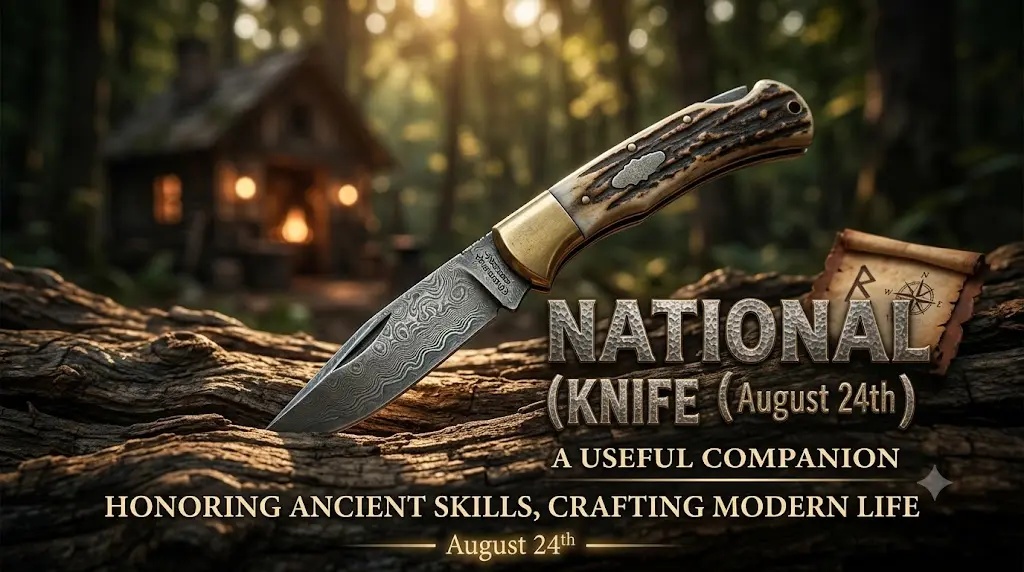
Did you know that the average person uses a knife at least 5 times a day? From cutting food to opening packages, knives are an essential tool in our daily lives. But have you ever stopped to think about the history and significance of knives? **National Knife Day** is the perfect opportunity to appreciate the importance of knives and learn more about their evolution.
INTRODUCTION & CORE IMPORTANCE
National Knife Day is celebrated on August 24th every year. It is a day to recognize the importance of knives in our daily lives, from cooking and hunting to self-defense and outdoor activities. Whether you are a chef, an outdoor enthusiast, or simply someone who appreciates the utility of a good knife, this day is for you.
HISTORICAL CONTEXT & TIMELINE
The history of knives dates back to the Stone Age, with early humans using stones and bones to create crude cutting tools. Over time, knives evolved to become more sophisticated, with the development of metals like copper, bronze, and iron. Today, knives are made from a variety of materials, including stainless steel, carbon steel, and titanium.
Key Milestones in Knife History
- Prehistory: Early humans use stones and bones to create cutting tools.
- Ancient Civilizations: Knives are made from copper, bronze, and iron.
- Medieval Period: Knives become more sophisticated, with the development of folding knives and swords.
- Modern Era: Knives are made from a variety of materials, including stainless steel, carbon steel, and titanium.
IN-DEPTH CORE TOPIC ANALYSIS
Types of Knives
There are many different types of knives, each with its own unique characteristics and uses. Some of the most common types of knives include:
- Chef’s knives: Used for chopping, slicing, and dicing food.
- Pocket knives: Small, portable knives used for everyday tasks.
- Hunting knives: Used for skinning and cleaning game.
- Survival knives: Used for outdoor activities, such as camping and hiking.
Safety and Maintenance
Knives can be dangerous if not used properly. It is essential to handle knives with care and maintain them regularly to ensure they remain in good condition. Some safety tips include:
- Always cut away from your body.
- Use a cutting board to prevent accidents.
- Store knives in a safe place, out of reach of children.
- Regularly sharpen and clean your knives.
PROS & CONS
Like any tool, knives have their pros and cons. Some of the advantages of knives include:
- Convenience: Knives are portable and easy to use.
- Versatility: Knives can be used for a variety of tasks.
- Effectiveness: Knives are an effective tool for cutting and chopping.
However, there are also some disadvantages to consider:
- Safety risks: Knives can be dangerous if not used properly.
- Maintenance: Knives require regular sharpening and cleaning.
- Cost: High-quality knives can be expensive.
DATA, NUMBERS & COMPARISON TABLES
According to a recent survey, 75% of people use a knife at least once a day. The most common uses for knives include:
| Use | Percentage |
|---|---|
| Cooking | 40% |
| Outdoor activities | 25% |
| Everyday tasks | 20% |
| Other | 15% |

FREQUENTLY ASKED QUESTIONS
What is the best type of knife for a beginner?
A chef’s knife or a pocket knife is a good starting point for beginners.
How do I sharpen a knife?
There are several ways to sharpen a knife, including using a whetstone, a sharpening steel, or a electric sharpener.
What is the difference between a stainless steel knife and a carbon steel knife?
Stainless steel knives are more resistant to corrosion, while carbon steel knives are sharper and more durable.
CONCLUSION & FINAL TAKEAWAYS
National Knife Day is a celebration of the importance of knives in our daily lives. Whether you are a chef, an outdoor enthusiast, or simply someone who appreciates the utility of a good knife, this day is for you. By understanding the history, significance, and safety of knives, we can appreciate their value and use them more effectively.
Please Write Your Comments