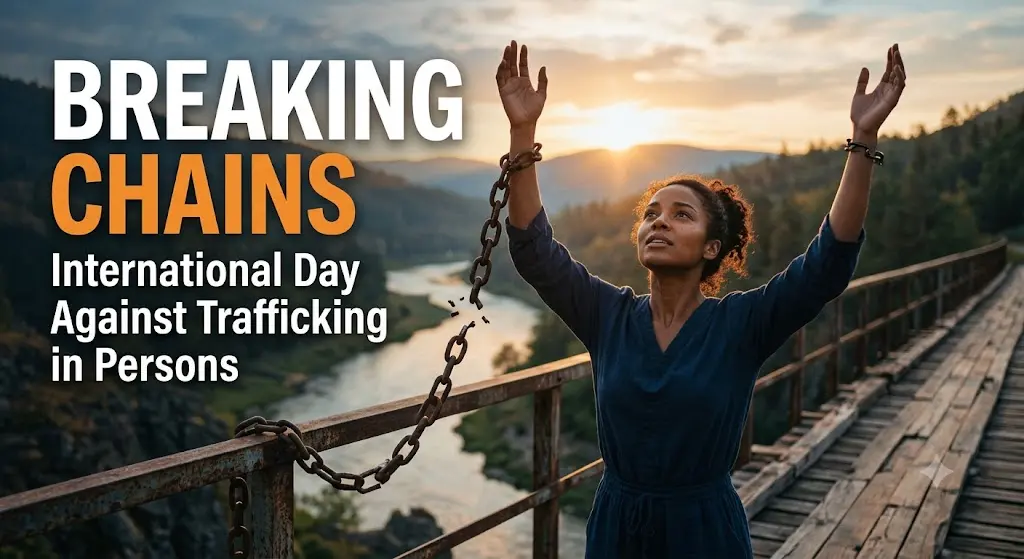
Breaking Chains: International Day Against Trafficking in Persons
Updated: 3 Aug 2026
56
Introduction & Core Importance
Human trafficking is a modern-day scourge that affects millions worldwide. The International Day Against Trafficking in Persons, observed on July 30th, aims to raise awareness about this heinous crime and promote collective action to prevent it. This article delves into the historical context, core importance, and in-depth analysis of human trafficking, providing actionable insights and expert perspectives.
Historical Context & Timeline
The transatlantic slave trade, which lasted from the 15th to the 19th century, is a stark reminder of the long history of human exploitation. The United Nations General Assembly designated July 30th as the World Day Against Trafficking in Persons in 2013, recognizing the need for a coordinated global response to this complex issue.
Key Milestones
- 1815: The Congress of Vienna abolishes the slave trade.
- 1948: The Universal Declaration of Human Rights prohibits slavery and servitude.
- 2000: The Protocol to Prevent, Suppress and Punish Trafficking in Persons, Especially Women and Children, is adopted.
In-Depth Core Topic Analysis
Types of Human Trafficking
Human trafficking takes many forms, including sex trafficking, forced labor, and organ trafficking. Each type has its unique characteristics, and understanding these differences is crucial for developing effective counter-trafficking strategies.
Victim Identification and Support
Identifying victims of human trafficking is a challenging task, as they often remain hidden in plain sight. Training law enforcement officials and social workers to recognize the signs of trafficking is essential for providing timely support and assistance to those in need.
Data, Numbers & Comparison Tables
According to the International Labor Organization (ILO), there are approximately 40.3 million victims of modern slavery worldwide, with 24.9 million in forced labor and 15.4 million in forced marriage.
| Region | Estimated Number of Victims |
|---|---|
| Asia and the Pacific | 15.4 million |
| Europe and Central Asia | 3.6 million |
| Africa | 7.7 million |
Frequently Asked Questions (FAQ)
What is human trafficking?
Human trafficking refers to the recruitment, transportation, or receipt of people, using force, coercion, or deception, for the purpose of exploiting them.
How can I help prevent human trafficking?
You can help by reporting suspicious activities, supporting anti-trafficking organizations, and raising awareness about this issue in your community.
What are the signs of human trafficking?
Common signs of human trafficking include unexplained injuries, fear or anxiety, and restricted freedom.
Conclusion & Final Takeaways
The fight against human trafficking requires a collective effort from governments, organizations, and individuals. By understanding the complexities of this issue and working together, we can create a safer, more just world for all. Remember, every action counts, and every voice matters in the pursuit of a trafficking-free world.
Please Write Your Comments