National Mountain Climbing Day: Your Complete Guide to Celebrating the Adventure
Updated: 29 Jul 2026
30
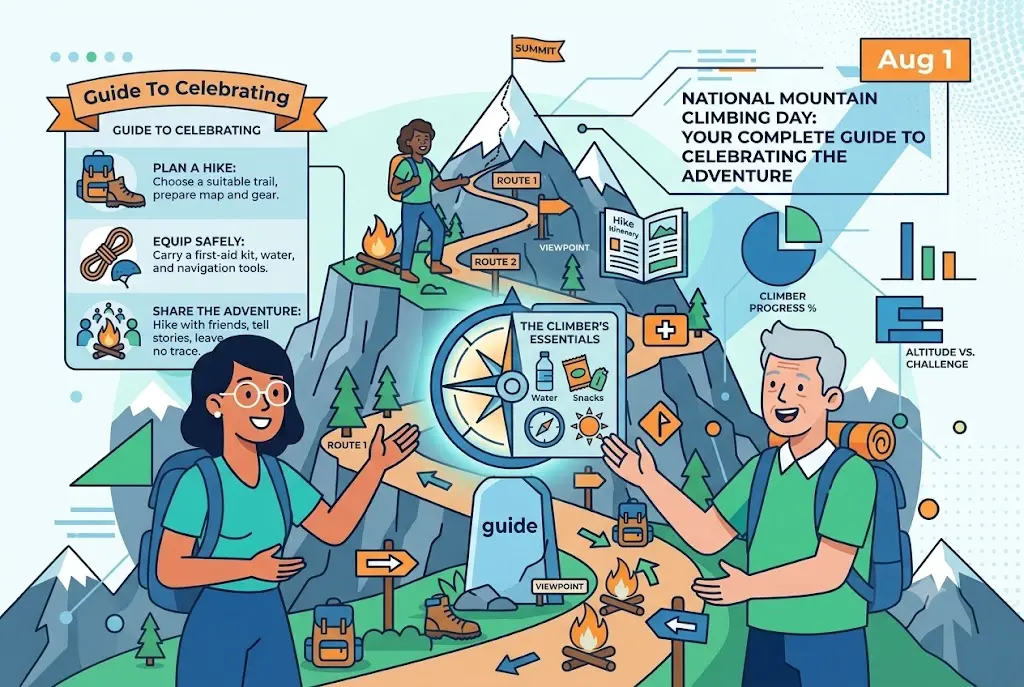
Introduction to National Mountain Climbing Day
Every year, outdoor enthusiasts, weekend hikers, and seasoned alpinists alike look forward to National Mountain Climbing Day — a day dedicated to celebrating one of humanity’s oldest and most rewarding pursuits. This observance encourages people of all ages and fitness levels to step outside, look up at the peaks around them, and consider what it might feel like to stand on top of one.
At its heart, National Mountain Climbing Day is about three simple ideas:
- Exploring the great outdoors and everything mountains have to offer
- Challenging yourself physically and mentally
- Protecting the natural landscapes that make climbing possible in the first place
Whether you’re an experienced climber with years of summits behind you, or someone who has never so much as hiked a local hill, this day is an invitation. You don’t need to scale Everest to participate — even a walk up a modest trail with a mountain view counts as honoring the spirit of the occasion.
A Brief History of Mountain Climbing
Mountain climbing, also known as mountaineering, is far from a modern invention. It’s a tradition woven into the story of human curiosity and endurance.
Ancient Beginnings
Long before climbing became a recreational sport, early civilizations climbed mountains for practical and spiritual reasons — to find safe passage between valleys, to build shrines closer to the heavens, or simply out of necessity for survival. Archaeological evidence shows that ancient peoples reached surprisingly high altitudes, driven by trade, religion, and exploration rather than sport.
The Birth of Modern Mountaineering
Mountaineering as a formal sport is generally traced back to the 18th and 19th centuries in Europe, particularly in the Alps. The first recorded ascent of Mont Blanc in 1786 is often cited as the symbolic beginning of modern mountaineering, sparking a wave of interest across Europe that came to be known as the “Golden Age of Alpinism.”
From Extreme Sport to Accessible Activity
As decades passed, climbing technology transformed the sport:
- Better equipment — ropes, harnesses, crampons, and ice axes became safer and more reliable
- Improved footwear and clothing — designed specifically for cold, wet, and high-altitude conditions
- Route mapping and weather forecasting — making expeditions far more predictable and safer
- Guided climbing services — opening the sport to beginners who once would have needed years of training
Today, mountain climbing spans an enormous range — from casual hikers tackling scenic foothills to elite athletes summiting the world’s highest and most dangerous peaks.
Benefits of Mountain Climbing
Mountain climbing isn’t just an adrenaline-filled adventure — it’s genuinely good for you. Here’s a closer look at what you gain each time you head for the trailhead.
Physical Health Benefits
- Cardiovascular fitness — Climbing is a sustained aerobic activity that strengthens your heart and lungs over time.
- Muscle strength and endurance — Your legs, core, and even your arms (especially on steep or technical terrain) get a full workout.
- Improved balance and coordination — Navigating uneven terrain sharpens your body’s stability and reflexes.
- Better sleep and appetite regulation — Physical exertion outdoors is linked to improved sleep quality and healthier eating patterns.
Mental and Emotional Benefits
- Reduced stress and anxiety — Time in nature has been shown to lower cortisol levels and ease mental tension.
- Increased mental toughness — Pushing through a difficult climb builds resilience that carries over into everyday life.
- A sense of accomplishment — Reaching a summit, however small, delivers a powerful confidence boost.
- Mindfulness and presence — Climbing demands focus on the here and now, offering a natural break from daily distractions.
Quick-Reference: Why Climb?
| Benefit | What It Does For You |
|---|---|
| Improved physical fitness | Builds strength, stamina, and heart health |
| Enhanced mental well-being | Reduces stress and boosts mood |
| Opportunity to discover new places | Exposes you to new trails, views, and ecosystems |
| Chance to challenge personal limits | Builds confidence and resilience |
How to Celebrate National Mountain Climbing Day
You don’t need a mountaineering permit or a team of Sherpas to take part. Here are some approachable ways to mark the occasion, no matter your experience level.
1. Plan a Climb That Matches Your Skill Level
- Beginners: Choose a well-marked local trail or a small hill with a moderate incline.
- Intermediate climbers: Look for a nearby peak or ridge hike that offers a bit more elevation gain and a rewarding view.
- Experienced climbers: Use the day as motivation to tackle a bucket-list summit or a more technical route.
2. Join a Guided Climb or Workshop
Many outdoor clubs, gyms, and adventure companies host beginner-friendly guided climbs or clinics around this time of year. These are a great way to:
- Learn proper technique and safety practices from experienced guides
- Try climbing without needing to own specialized gear
- Meet other outdoor enthusiasts in your area
3. Prepare the Right Way
Even a short climb deserves basic preparation:
- Check the weather forecast before heading out
- Wear proper footwear with good ankle support and traction
- Bring plenty of water, snacks, and sun protection
- Let someone know your planned route and expected return time
- Pack a basic first-aid kit for minor scrapes or blisters
4. Share the Experience
Part of the fun of National Mountain Climbing Day is spreading the enthusiasm:
- Post photos and stories from your climb on social media
- Tag local hiking or climbing groups to inspire others to join in
- Encourage friends or family members who’ve never climbed to come along
5. Give Back to the Mountains
Since preserving natural landscapes is central to the spirit of this day, consider:
- Practicing “Leave No Trace” principles — pack out everything you bring in
- Staying on marked trails to protect fragile ecosystems
- Volunteering with a local trail maintenance or conservation group
Final Thoughts
National Mountain Climbing Day is a reminder that adventure doesn’t have to be extreme to be meaningful. Whether you’re summiting a towering peak or simply walking up your nearest hill with fresh eyes, the goal is the same: to appreciate the outdoors, push your own boundaries a little, and help protect these landscapes for the climbers who’ll come after you.
So lace up your boots, check the weather, and go find your mountain — however big or small it may be.
Please Write Your Comments