International Day for the Abolition of Slavery: Ending Modern-Day Slavery
Updated: 4 Aug 2026
52
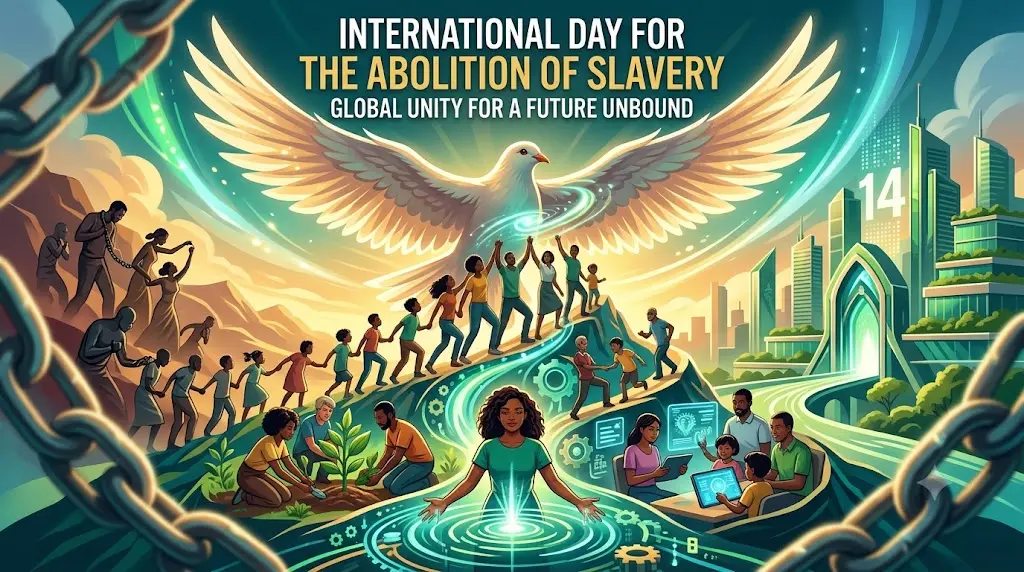
Did you know that **40 million people** are trapped in modern slavery worldwide? This staggering number highlights the urgent need to combat this heinous crime. The International Day for the Abolition of Slavery, observed on December 2nd, serves as a reminder of the ongoing struggle to eradicate slavery in all its forms.
INTRODUCTION & CORE IMPORTANCE
The International Day for the Abolition of Slavery is a United Nations-recognized observance that aims to raise awareness about the persistence of slavery and the need for its abolition. This day is crucial for **human rights advocates**, **policy makers**, and **individuals** who want to make a difference in the lives of millions of people affected by slavery.
HISTORICAL CONTEXT & TIMELINE
The history of slavery dates back thousands of years, with the first recorded instances of slavery found in ancient civilizations such as **Egypt** and **Greece**. The transatlantic slave trade, which occurred from the 15th to the 19th century, is one of the most infamous examples of slavery in human history. Key milestones in the fight against slavery include the **Emancipation Proclamation** in 1863 and the **Universal Declaration of Human Rights** in 1948.
Notable Moments in the Fight Against Slavery
- 1791: The Haitian Revolution, the largest successful slave revolt in history, leads to the establishment of Haiti as the first independent black nation.
- 1833: The Slavery Abolition Act is passed in the British Empire, abolishing slavery throughout the empire.
- 2007: The United Nations adopts the **International Day for the Abolition of Slavery** to be observed on December 2nd.
IN-DEPTH CORE TOPIC ANALYSIS
Forms of Modern-Day Slavery
Modern-day slavery takes many forms, including **human trafficking**, **forced labor**, and **bonded labor**. These forms of slavery are often hidden in plain sight, making it difficult to detect and combat them.
Causes and Consequences of Slavery
The causes of slavery are complex and multifaceted, involving factors such as **poverty**, **lack of education**, and **social inequality**. The consequences of slavery are equally devastating, resulting in **physical and emotional trauma**, **loss of dignity**, and **perpetuation of poverty**.

Efforts to Combat Slavery
Efforts to combat slavery involve a range of strategies, including **legislative reforms**, **law enforcement**, and **community-based initiatives**. Organizations such as the **International Labor Organization** and the **United Nations** play a crucial role in coordinating these efforts and providing support to victims of slavery.
PROS & CONS
The fight against slavery is not without its challenges. Some of the pros of anti-slavery efforts include **increased awareness**, **strengthened laws**, and **support for victims**. However, there are also cons, such as **limited resources**, **corruption**, and **social and cultural barriers**.
DATA, NUMBERS & COMPARISON TABLES
According to the **International Labor Organization**, there are approximately **40 million people** trapped in modern slavery worldwide. This number represents a significant decrease from the estimated **46 million people** in slavery in 2016.
| Year | Number of People in Slavery |
|---|---|
| 2016 | 46 million |
| 2020 | 40 million |
FREQUENTLY ASKED QUESTIONS (FAQ)
What is the definition of slavery?
Slavery is defined as the state or condition of being a slave, which is a person who is owned by another person, group, or entity.
What are the different forms of modern-day slavery?
Modern-day slavery takes many forms, including human trafficking, forced labor, and bonded labor.
How can I get involved in the fight against slavery?
There are many ways to get involved in the fight against slavery, including volunteering with anti-slavery organizations, donating to reputable charities, and raising awareness about the issue.
CONCLUSION & FINAL TAKEAWAYS
In conclusion, the International Day for the Abolition of Slavery is a crucial observance that highlights the ongoing struggle to eradicate slavery in all its forms. By understanding the history, causes, and consequences of slavery, we can work together to combat this heinous crime and create a world where all people are free and equal.
Please Write Your Comments