Celebrating August Kranti Din: The Quit India Movement Anniversary
Updated: 31 Jul 2026
69
Introduction to Quit India Movement Anniversary
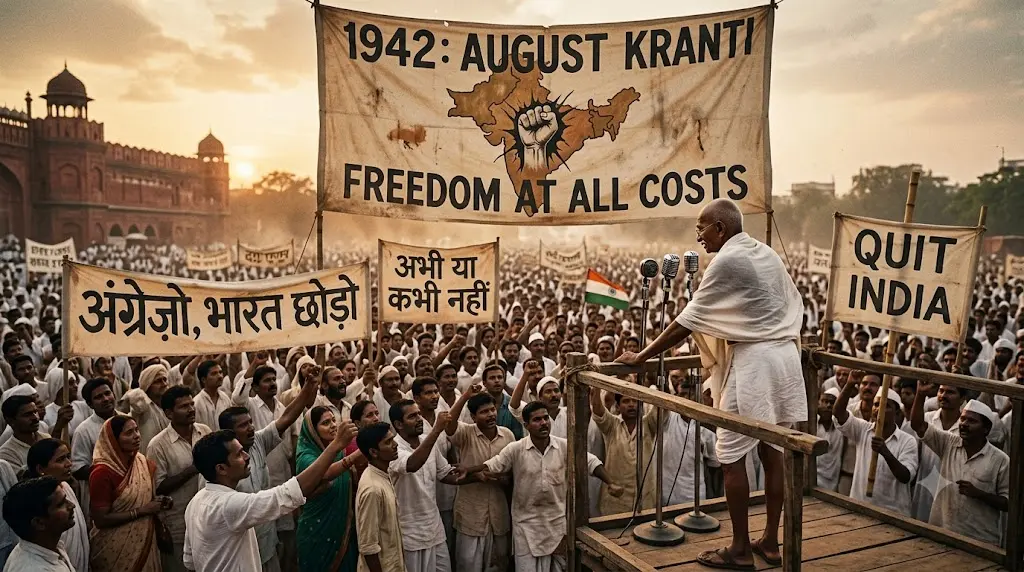
The Quit India Movement, also known as August Kranti, was a pivotal moment in India’s struggle for independence. It began on August 8, 1942, and marked a significant escalation in the country’s fight against British rule. This movement was sparked by Mahatma Gandhi’s call to action, urging the British to leave India. The Quit India Movement Anniversary, observed on August 8th, commemorates this historic event.
Historical Context and Timeline
The Quit India Movement was a culmination of years of resistance against British colonial rule. The movement was preceded by the failure of the Cripps Mission in 1942, which aimed to negotiate Indian support for the British war effort in exchange for a promise of independence after the war. Gandhi’s call for mass civil disobedience led to widespread protests, arrests, and violence across the country.
Key Milestones
- August 8, 1942: Mahatma Gandhi delivers his ‘Do or Die’ speech, launching the Quit India Movement.
- August 9, 1942: Mass arrests of Indian National Congress leaders, including Gandhi, Jawaharlal Nehru, and Sardar Vallabhbhai Patel.
- 1942-1944: Widespread protests, strikes, and acts of sabotage against British rule.
In-Depth Analysis of the Quit India Movement
Causes and Consequences
The Quit India Movement was a response to the British government’s refusal to grant India immediate independence. The movement’s consequences were far-reaching, including the eventual realization that the British could no longer maintain control over India. The movement also galvanized international support for India’s independence.
Role of Key Figures
Mahatma Gandhi, with his philosophy of non-violent resistance, was the central figure of the Quit India Movement. Other key leaders, such as Jawaharlal Nehru and Sardar Vallabhbhai Patel, played crucial roles in organizing and sustaining the movement.
Data and Statistics
Estimates suggest that over 100,000 people were arrested during the Quit India Movement, and more than 2,500 were killed in clashes with British authorities. The movement involved people from all walks of life, showcasing the depth of resistance against British rule.
Frequently Asked Questions
What was the main goal of the Quit India Movement?
The main goal was to pressure the British to grant India immediate independence.
Who were the key leaders of the movement?
Mahatma Gandhi, Jawaharlal Nehru, and Sardar Vallabhbhai Patel were among the key leaders.
What was the outcome of the Quit India Movement?
The movement marked a significant step towards India’s independence, which was finally achieved on August 15, 1947.
Conclusion and Final Takeaways
The Quit India Movement Anniversary is a reminder of the sacrifices and determination of those who fought for India’s freedom. It serves as a powerful symbol of resistance against oppression and a testament to the effectiveness of non-violent civil disobedience.
Please Write Your Comments